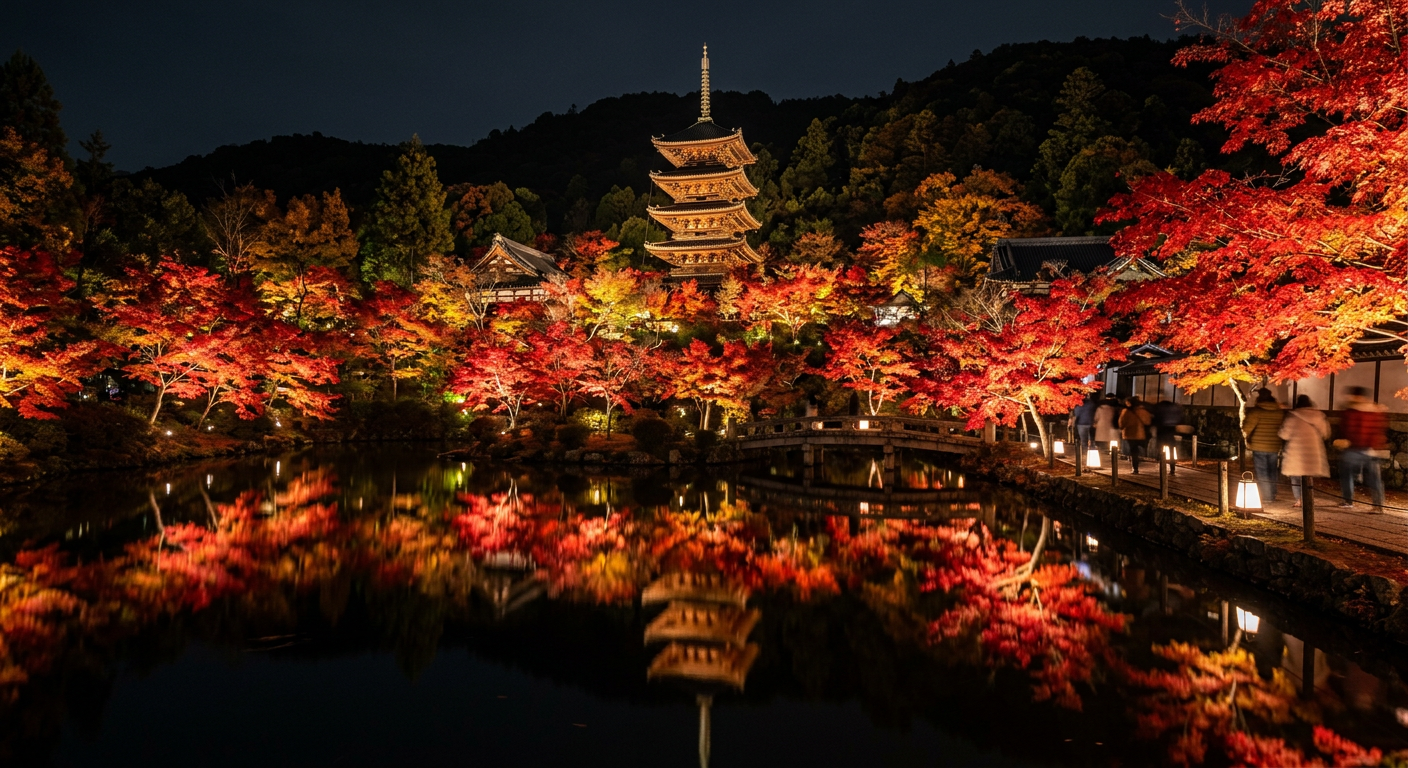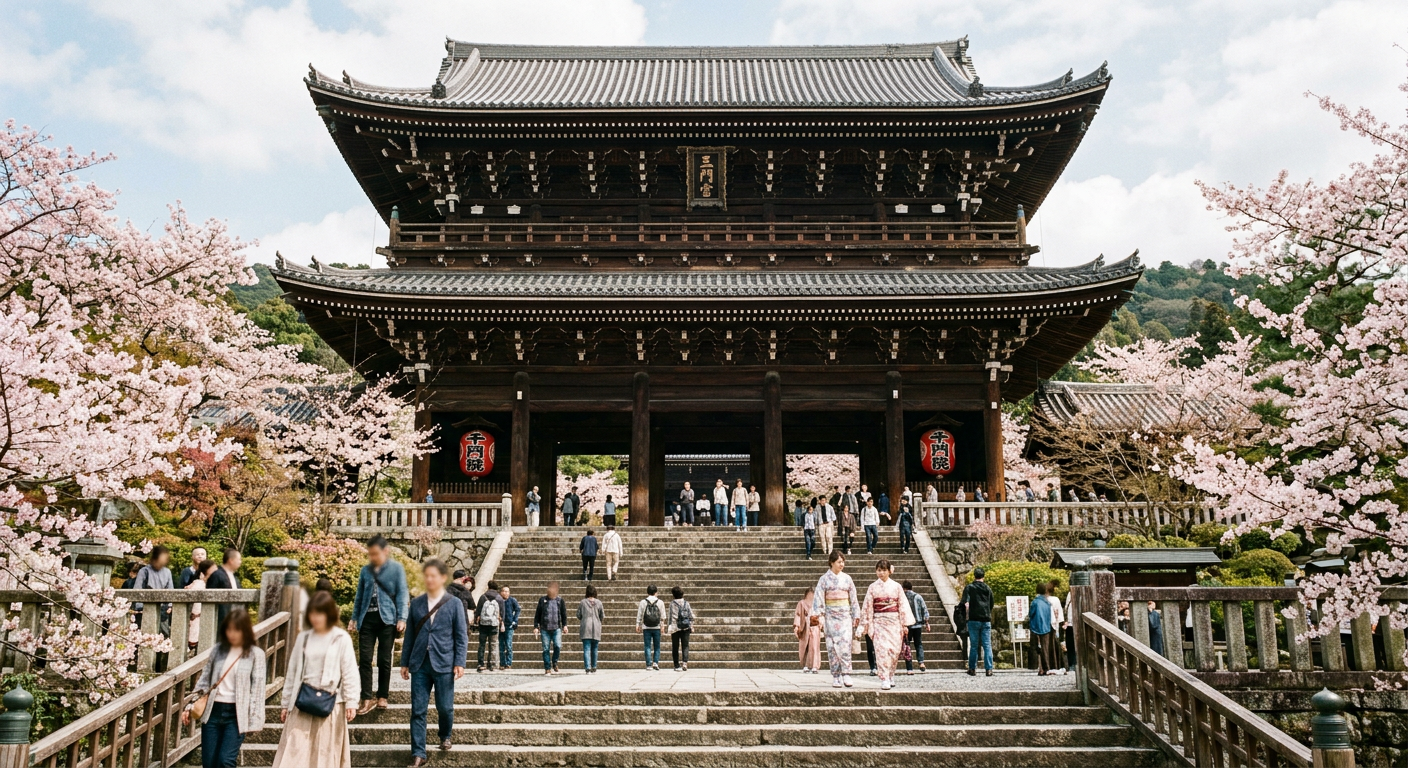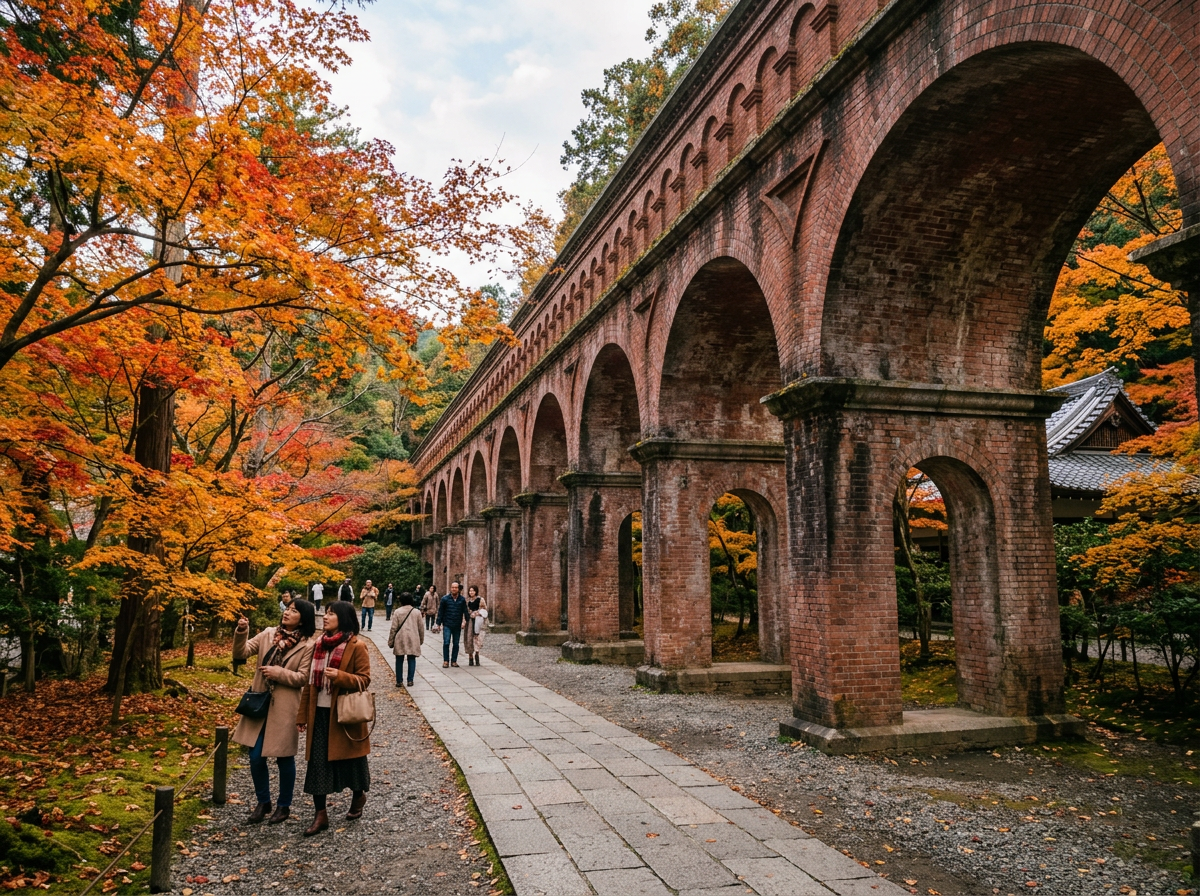
Head temple of Rinzai Zen with a towering gate, a dry garden and a brick aqueduct you can walk on.
What to expect
Nanzen-ji sits at the foot of the eastern hills at the start of the Philosopher's Path. Climb the massive Sanmon gate for a view across the city, see the 'leaping tiger' rock garden at the Hojo, then walk under the 1890 Suirokaku aqueduct that still carries water from Lake Biwa. The temple grounds are free to wander, and the side temples Nanzen-in and Tenju-an have quiet gardens of their own.
History
Founded in 1291 when Emperor Kameyama turned his detached palace over to Zen monks, Nanzen-ji became the highest-ranked Zen temple in Japan. Its gate was rebuilt in 1628 to honour samurai who died in the Siege of Osaka.
Getting there
10-minute walk from Keage Station, Exit 1, through the Keage Incline tunnel.
Etiquette
Remove shoes inside the Hojo and keep to the veranda edges; no tripods.
Insider tips
- Pair with the Philosopher's Path heading north to Ginkaku-ji.
- Okutan, next to the gate, serves yudofu (simmered tofu) in a garden setting.
- The aqueduct is busiest 10:00–15:00; come at opening for empty arches.
Accessibility: Grounds are flat gravel; the Sanmon has steep steps and is not wheelchair accessible.